
"western regions"
3000 article(s) found

The western valley of the Costa Rican coffee producing region with a deep coffee culture
Costa Rica's law only allows the planting of Arabica varieties, and Robusta is contraband in its territory, which shows the importance Costa Rica attaches to the quality of coffee. Most of the varieties cultivated in Costa Rica are caturra, catuai and so on, and there are many varieties in the country, the most famous is the bourbon variety villa sarchi, which is found at high altitudes.

Growing in the Lutesilo region of the western province of Malaba in southern Rwanda
Malaba Coffee grows in southern Rwanda, about 12 kilometers (7 miles) from the city of Butare and 150 kilometers (93 miles) from the capital, Gejali. The plan began in the Malaba area of Butare province, but was taken over by a local government organization in 2006, which is now part of the Huye district of the southern province. Due to its proximity to the East African Rift Valley and the Neuenway Forest Mountains, the terrain

The earliest coffee shop in Chongqing
Coffee is one of the three largest drinks in the world, which is drunk by people in almost every country and region. People in Chongqing know a little about coffee from foreigners at first, or occasionally in the upper hall of dignitaries. It is so well-known that even the general public can taste and enjoy the coffee in order to appreciate the color of the coffee.

Introduction to the fragrant Ecuadorian Coffee Flavor and the Fine Coffee in the Manor area
Ecuador is divided into the western coast, the central mountains, the eastern Amazon River basin and the four central regions of the Galapagos Islands, with diverse climatic conditions. The western coastal plain belongs to the tropical rain forest climate, with an average temperature of 23-25 ℃. The central Andes. The intermountain basin in this area belongs to the savanna climate, and the mountain belongs to the subtropical forest climate, with perennial snow above 4000 meters above sea level. Annual average decline

Introduction to the characteristics of high-quality coffee beans in the producing area of Ecuadorian coffee with balanced acidity
Ecuador is divided into the western coast, the central mountains, the eastern Amazon River basin and the four central regions of the Galapagos Islands, with diverse climatic conditions. The western coastal plain belongs to the tropical rain forest climate, with an average temperature of 23-25 ℃. The central Andes. The intermountain basin in this area belongs to the savanna climate, and the mountain belongs to the subtropical forest climate, with perennial snow above 4000 meters above sea level. Annual average decline

Coffee Kingdom Brazil is located in Latin America in the Western Hemisphere.
Brazil is located in the Latin American region of the Western Hemisphere, located in the eastern part of South America and on the west coast of the Atlantic Ocean, bordering all countries on the South American continent except Ecuador and Chile; the vast majority of the territory lies between the equator and the Tropic of Cancer, is the most extensive tropical country in the world. The territory has a tropical rain forest climate and a tropical prairie climate. The superior tropical natural conditions are very suitable.

The flavor and taste of sunburn bourbon coffee in batches from Monseha & Mushoi processing plant in the western province of Rwanda
For the exchange of professional baristas, please follow the coffee workshop (Wechat official account cafe_style) Montchamps Hamuyi processing Plant in the western province of Rwanda to work together to batch the sunburn bourbon species Rwanda West Province Mashesha CWS Bourbon Natural countries: Rwanda Rwanda production area: the western province West Province processing plant: Monseha processing plant Mashesha CWS,

Fruit aroma of Ecuadorian Coffee Manor flavor and taste characteristics of boutique coffee beans
Ecuador is divided into the western coast, the central mountains, the eastern Amazon River basin and the four central regions of the Galapagos Islands, with diverse climatic conditions. The western coastal plain belongs to the tropical rain forest climate, with an average temperature of 23-25 ℃. The central Andes. The intermountain basin in this area belongs to the savanna climate, and the mountain belongs to the subtropical forest climate, with perennial snow above 4000 meters above sea level. Annual average decline

Introduction to the fragrant Ecuadorian Coffee Flavor and the Fine Coffee in the Manor area
Ecuador is divided into the western coast, the central mountains, the eastern Amazon River basin and the four central regions of the Galapagos Islands, with diverse climatic conditions. The western coastal plain belongs to the tropical rain forest climate, with an average temperature of 23-25 ℃. The central Andes. The intermountain basin in this area belongs to the savanna climate, and the mountain belongs to the subtropical forest climate, with perennial snow above 4000 meters above sea level. Annual average decline

Recommendation of West Valley Manor in the Western Valley of Costa Rica
West Valley Manor in the western valley of Costa Rica recommended Central America as a land bridge connecting North and South America. There are seven countries, namely, Belize, Costa Rica, El Salvador, Guatemala, Honduras, Nicaragua and Panama. Seven Central American countries all produce coffee, with Guatemala, Costa Rica and Honduras among the top 10 coffee exporters in the world. Coffee

Peruvian organic coffee beans, a major coffee producer in western South America
Peruvian coffee, famous for its organic coffee. Peru (Spanish: Per; Quechua, Aymara: Piruw), the full name of the Republic of Peru (Spanish: Repblica del Per), is a country in western South America. Coffee origin: Peru (Peru) is also a major coffee producer. Up to 98% of Peruvian coffee is grown in forest areas, and most producers are

Flavor and taste characteristics of coffee manor in Ecuador introduction to Santa Cruz Manor
Ecuador is divided into the western coast, the central mountains, the eastern Amazon River basin and the four central regions of the Galapagos Islands, with diverse climatic conditions. The western coastal plain belongs to the tropical rain forest climate, with an average temperature of 23-25 ℃. The central Andes. The intermountain basin in this area belongs to the savanna climate, and the mountain belongs to the subtropical forest climate, with perennial snow above 4000 meters above sea level. Annual average decline
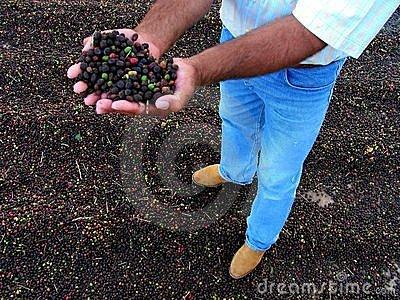
Taste description of Brazilian South Minas Coffee in Tropical Rain Forest region
Taste description of Brazilian South Minas Coffee in Tropical Rain Forest region Brazilian producing areas can also be divided into five grades according to this standard: extremely supple: South Minas, Serrado platform in the central and western part of Minas / Mojiana / Bahia Diamond Plateau in the northeast of Sao Paulo province: slightly higher in the Bahia / Minas southeast forest / Parana / Espiritu (hills) / S ã o Paulo

Introduction to the fragrant Ecuadorian Coffee Flavor and the Fine Coffee in the Manor area
The country is divided into three parts: the western coast, the central mountainous region and the eastern region. Map of Ecuador the western coast of the map of Ecuador: including coastal plains and foothills, high in the east and low in the west, generally below 200 meters above sea level, with some hills and low mountains at an altitude of 600 to 700 meters. Belongs to the tropical rain forest climate, the southernmost end begins to transition to the savanna climate. The average annual precipitation from north to south is 3.

Introduction to Santa Cruz Manor in Ecuador Coffee Manor
The country is divided into three parts: the western coast, the central mountainous region and the eastern region. Map of Ecuador the western coast of the map of Ecuador: including coastal plains and foothills, high in the east and low in the west, generally below 200 meters above sea level, with some hills and low mountains at an altitude of 600 to 700 meters. Belongs to the tropical rain forest climate, the southernmost end begins to transition to the savanna climate. The average annual precipitation from north to south is 3.

Mellow Burundian Coffee Flavor Taste introduction to Fine Coffee in Manor production area
There are many plateaus and mountains in Burundi, most of which are made up of the plateau on the east side of the East African Rift Valley. The national average elevation is 1600 meters, which is known as the mountain country. According to the topography of Burundi, it can be divided into three regions: the western plain, along the Ruzizi River, the Rift Albrtine plain, 774 to 1000 meters above sea level; and the central and western mountains, with an average elevation of 1700 meters, with the highest peak in Bujumbura.

The taste of the coffee in Santa Cruz Manor, Ecuador is very balanced and refreshing.
Ecuador is divided into the western coast, the central mountains, the eastern Amazon River basin and the four central regions of the Galapagos Islands, with diverse climatic conditions. The western coastal plain belongs to the tropical rain forest climate, with an average temperature of 23-25 ℃. The central Andes. The intermountain basin in this area belongs to the savanna climate, and the mountain belongs to the subtropical forest climate, with perennial snow above 4000 meters above sea level. Annual average decline

Indonesia Bali Coffee Region Manor Introduction Quinta Mani Region Kahayangan Manor Arabica
Balinese people are descendants of prehistoric humans who migrated from other Indonesian islands and have retained their own national and ethnic identities and social values best suited to their own survival and development. Bali Bali According to the literature, the first contact with the outside world that changed their lives was with merchant ships and travelers from India. They brought India.

Introduction to the characteristics of Dominica Santo Domingo Coffee Flavor Manor
At the beginning of the 17th century, French, Dutch, and British pirates were operating in the western part of the island of Hispaniola. France began to allow farmers and merchants to gradually colonize the western part of the Spanish island, blocked by the island's mountains. Without attracting the attention of Spaniards in the east, in 1677, about 4,000 French lived in 11 villages in the west of the island. In 1697, France and Spain

Introduction of Manor Theodotos in San Juan, Honduras
Professional coffee knowledge exchange more coffee bean information please follow the coffee workshop (Wechat official account cafe_style) introduction to the eight major coffee producing areas in Honduras according to IHCAFE data, Honduran coffee can be divided into six major producing areas, mainly located in the western and southern Copan, Obalaca Opalaca), Montecillos (Montecillos), Gongma Agua (Co)